Choosing a wall mural is no longer just about picking an image. You also need to decide how that image will actually get onto the wall.
The three most common options are:
Wallpaper murals
Vinyl wall murals
Direct wall printing
All three can produce large, customized graphics, but they perform very differently when it comes to seams, installation, durability, removability, wall compatibility, and long-term cost.
So which is best?
Wallpaper is usually best for residential interiors and decorative feature walls. Vinyl works well for removable graphics, promotions, exhibitions, and commercial branding. Direct wall printing is strongest when you want a seamless, customized mural printed directly onto the existing wall without wallpaper, vinyl, or adhesive.
The right choice depends on how permanent the mural needs to be, what the wall is made of, how often the design will change, and what kind of finish you want.
Wallpaper vs. Vinyl vs. Direct Wall Printing: Quick Comparison
Factor | Wallpaper Mural | Vinyl Wall Mural | Direct Wall Printing |
|---|---|---|---|
Printing method | Printed on wallpaper, then installed | Printed on adhesive vinyl, then applied | Printed directly onto the wall |
Visible seams | Usually yes | Usually yes on large murals | No material seams |
Adhesive required | Usually yes | Yes | No |
Installation | Manual panel installation | Manual application | Machine prints on site |
Removal | Relatively easy depending on material | Easy to moderate depending on adhesive | Usually painted over or covered |
Design flexibility | High | High | Very high |
Surface compatibility | Best on smooth prepared walls | Best on smooth, clean walls | Works on many stable wall surfaces, depending on printer |
Durability | Moderate to high | High with suitable media/lamination | High indoors with suitable ink and wall preparation |
Best for | Homes, bedrooms, decorative interiors | Retail graphics, offices, exhibitions, temporary branding | Permanent murals, branded interiors, feature walls, custom commercial spaces |
Main advantage | Decorative finish and easy replacement | Durability and removability | Seamless printing with no wallcovering material |
The biggest difference is simple:
Wallpaper and vinyl print the image onto another material first. Direct wall printing prints the image onto the wall itself.
That distinction affects almost everything else.
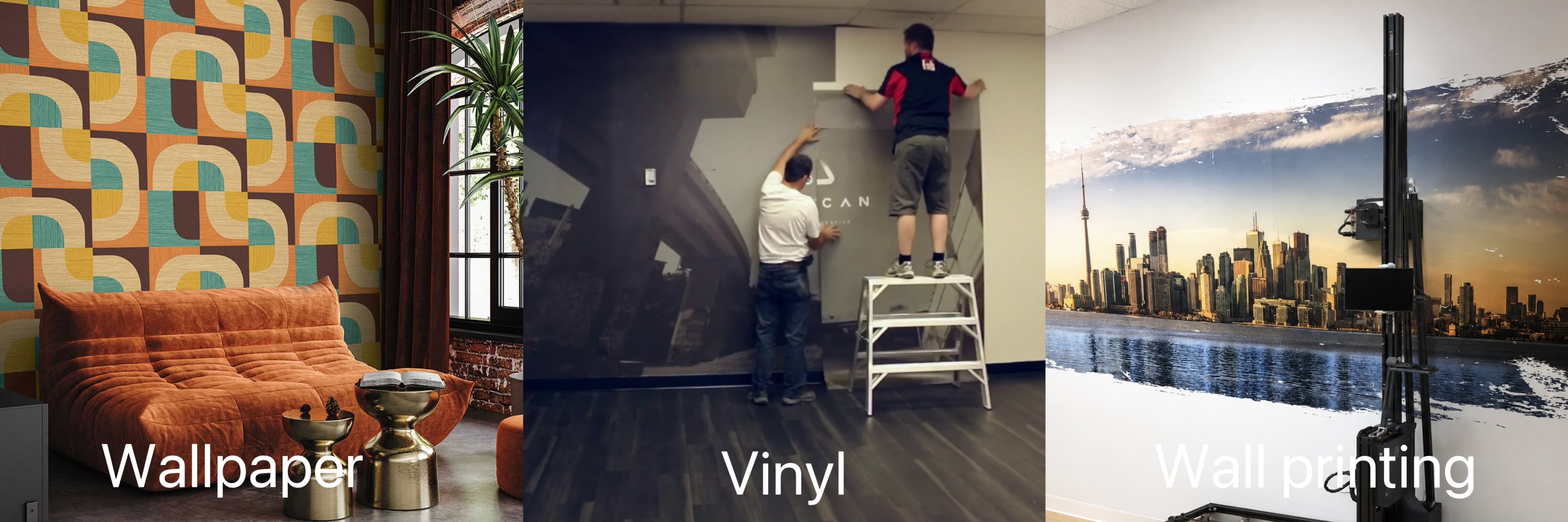
What Is Wallpaper Mural Printing?
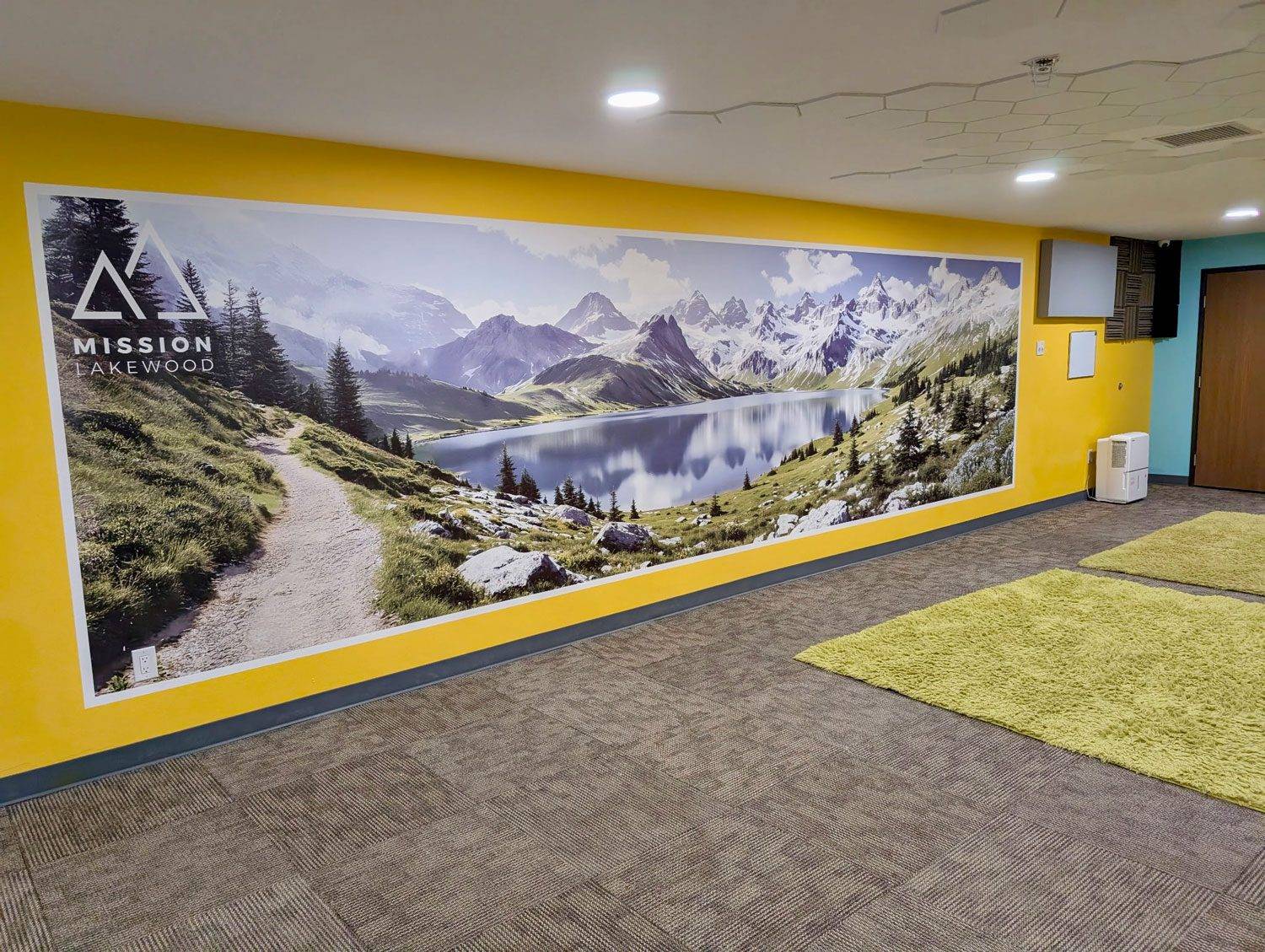
A wallpaper mural is printed onto paper, non-woven wallpaper, fabric-backed material, or another wallcovering substrate. The printed material is divided into panels and installed across the wall.
Wallpaper remains one of the most familiar options for residential wall decoration.
Advantages of Wallpaper Murals
Wallpaper offers a wide range of finishes, including matte, textured, fabric-like, and traditional paper surfaces. This makes it especially attractive when the material itself is part of the desired interior design.
It is also relatively easy to replace.
If a homeowner wants to redesign a bedroom, living room, nursery, or feature wall several years later, the wallpaper can normally be removed and replaced without changing the entire wall structure.
Wallpaper is particularly suitable for:
Bedrooms
Living rooms
Children's rooms
Apartments
Restaurants
Boutique interiors
Decorative feature walls
Limitations of Wallpaper Murals
The main issue is installation.
Large murals normally require several panels. Those panels need to be aligned carefully so that patterns, photographs, faces, lettering, and architectural lines continue correctly across each seam.
Poor installation can result in:
Visible seams
Misaligned images
Air bubbles
Wrinkles
Lifting edges
The wall also needs to be relatively smooth and properly prepared.
Wallpaper therefore works best when removability and decorative material finish matter more than achieving a completely seamless printed surface.
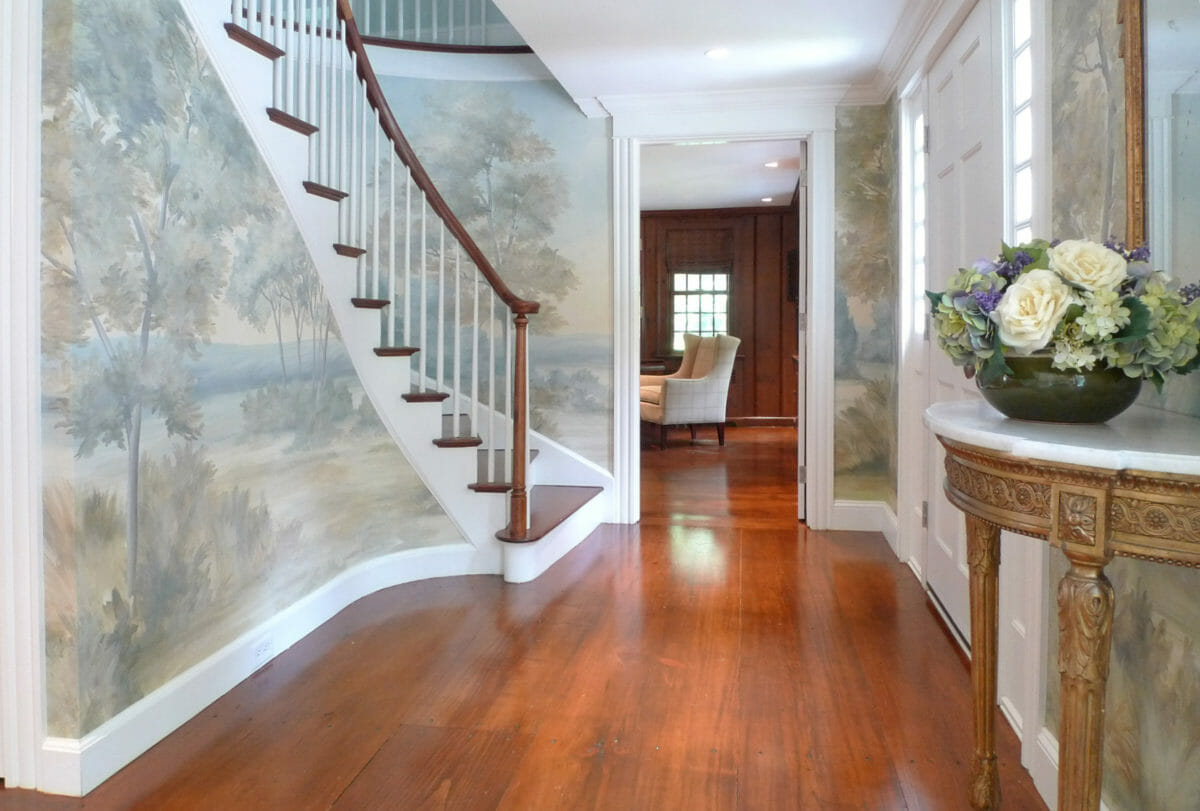
What Is a Vinyl Wall Mural?
Vinyl wall murals are printed onto self-adhesive vinyl or another graphic film and then applied directly to the wall.
They are especially common in commercial graphics because vinyl combines high print quality with relatively fast installation and good durability.
Advantages of Vinyl Wall Murals
Vinyl is particularly useful when graphics need to be changed periodically.
A retail store, exhibition booth, office, showroom, or promotional space may want one campaign today and another several months later. Instead of repainting the wall, the existing vinyl can often be removed and replaced.
Depending on the media and laminate used, vinyl can also provide good resistance to:
Moisture
Scratches
Frequent cleaning
General commercial wear
That makes it a strong choice for environments where durability and replaceability need to be balanced.
Typical applications include:
Retail promotions
Trade shows
Exhibition booths
Office branding
Showrooms
Event graphics
Temporary commercial displays
Limitations of Vinyl Wall Murals
Vinyl still requires a separate material, adhesive, printing process, transportation, and installation.
Large murals usually need multiple sections, which means seams may still be visible when viewed closely.
The quality of the finished wall also depends heavily on the surface underneath. Dust, rough texture, moisture, recently painted walls, or uneven surfaces can reduce adhesion.
Removal is another factor. Although removable vinyl products are available, not every vinyl film behaves the same way. Adhesive strength, wall paint condition, installation time, temperature, and surface preparation can all affect how easily the graphic comes off.
Vinyl therefore makes the most sense when the mural needs to be durable but may also need to be replaced later.
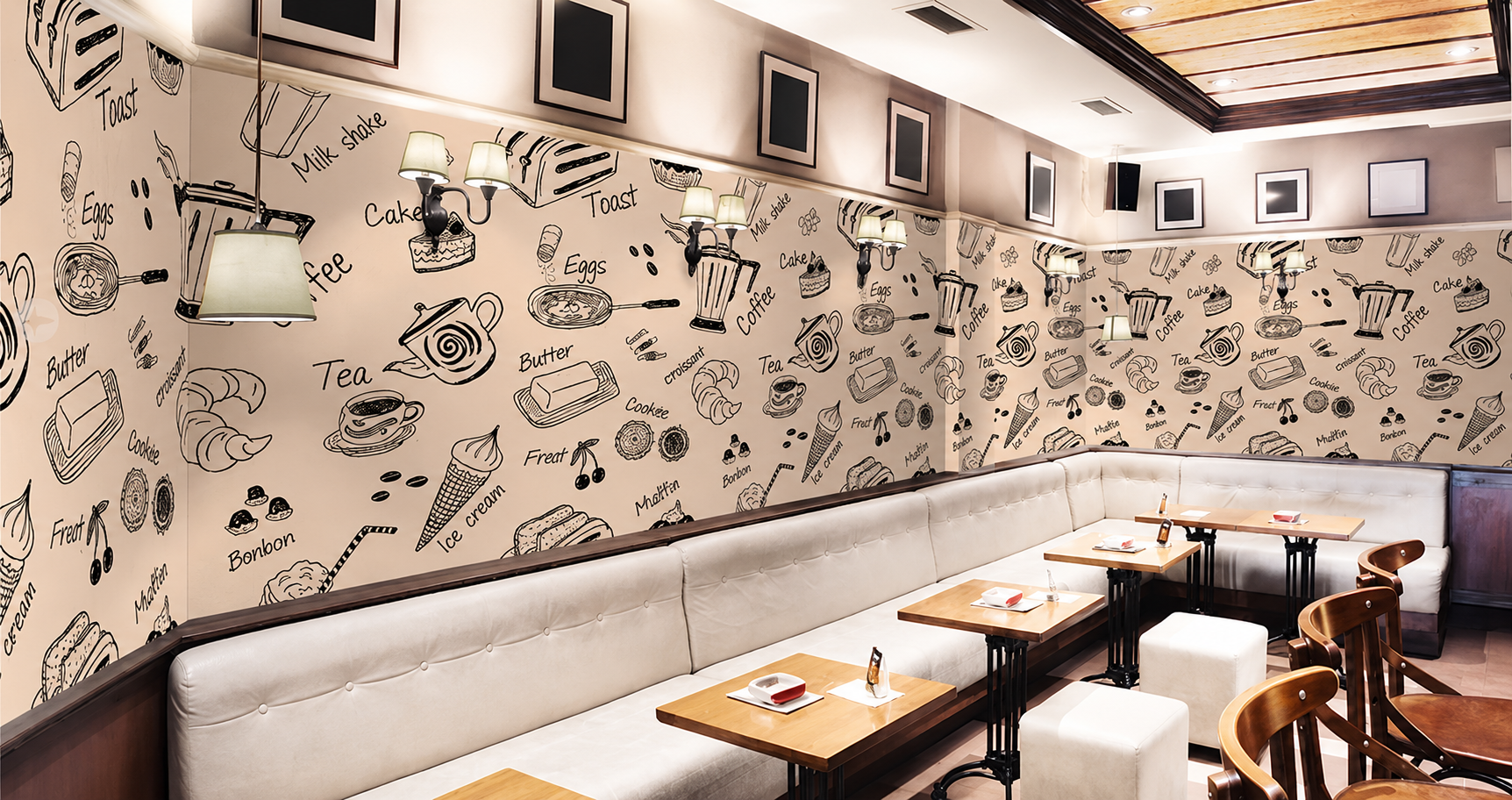
What Is Direct Wall Printing?
Direct wall printing removes the wallpaper or vinyl layer entirely.
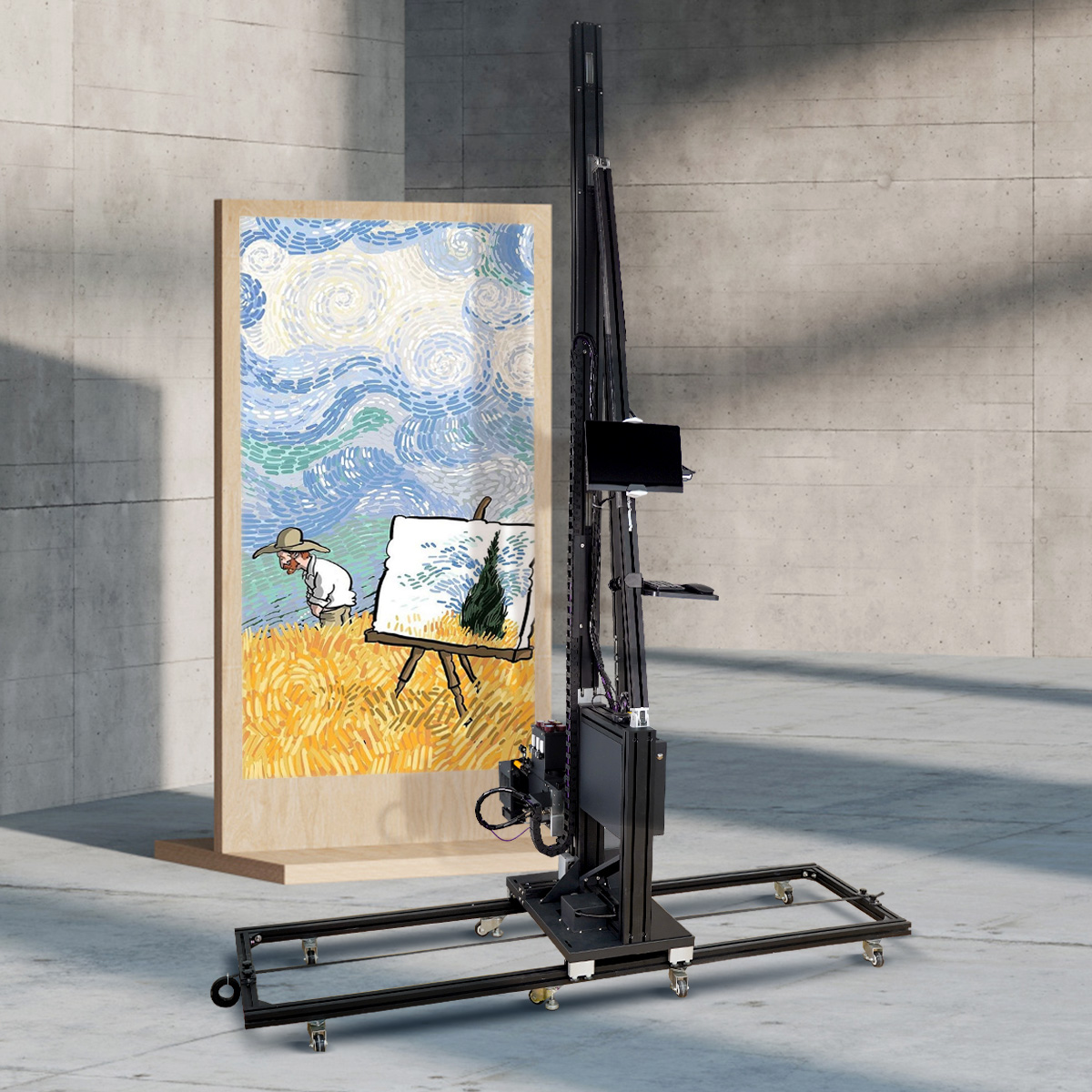
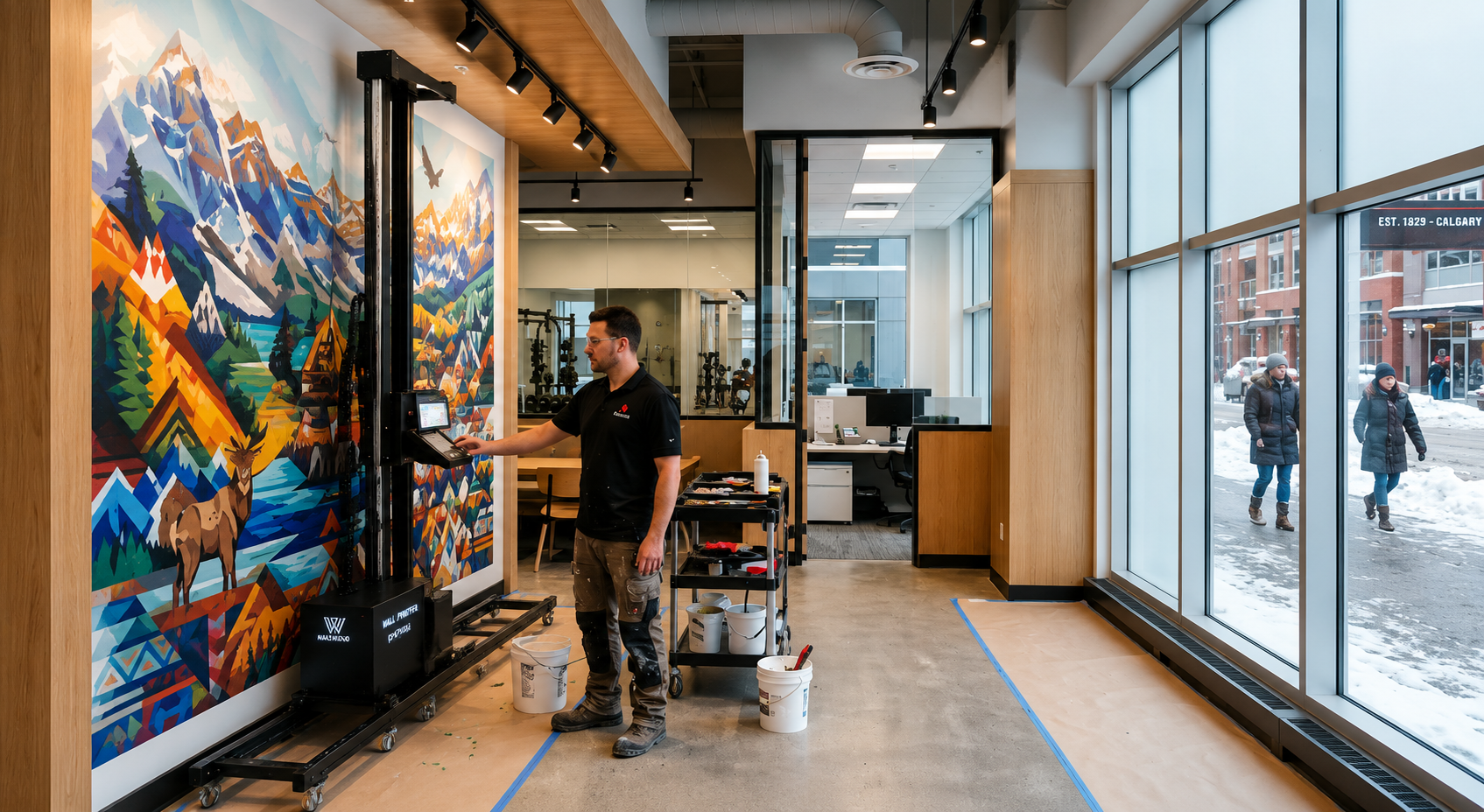
A vertical wall printer moves across the wall and prints the digital image directly onto the surface.
Instead of:
digital file → printed material → installation → wall
the process becomes:
digital file → wall
This creates several important differences.
No Wallpaper or Vinyl Material
There is no large sheet of printed media covering the wall.
That means there is no wallpaper to paste, no vinyl backing to remove, and no large wallcovering panels to transport and install.
Seamless Large-Scale Images
Because the image is printed directly onto the wall, the finished mural does not have the material seams normally associated with wallpaper or multi-panel vinyl graphics.
This is especially valuable for:
Large photographs
Fine artwork
Brand graphics
Gradients
Landscapes
Detailed illustrations
Luxury interior designs
When viewers stand close to the mural, eliminating panel seams can make the image feel more integrated with the architecture.
More Freedom for Custom Projects
Wall printer is particularly useful when each wall needs a different design.
Restaurants, hotels, offices, gyms, schools, shopping spaces, entertainment venues, and homeowners can print artwork designed specifically for that location instead of choosing from standard wallpaper patterns.
The mural effectively becomes part of the wall.
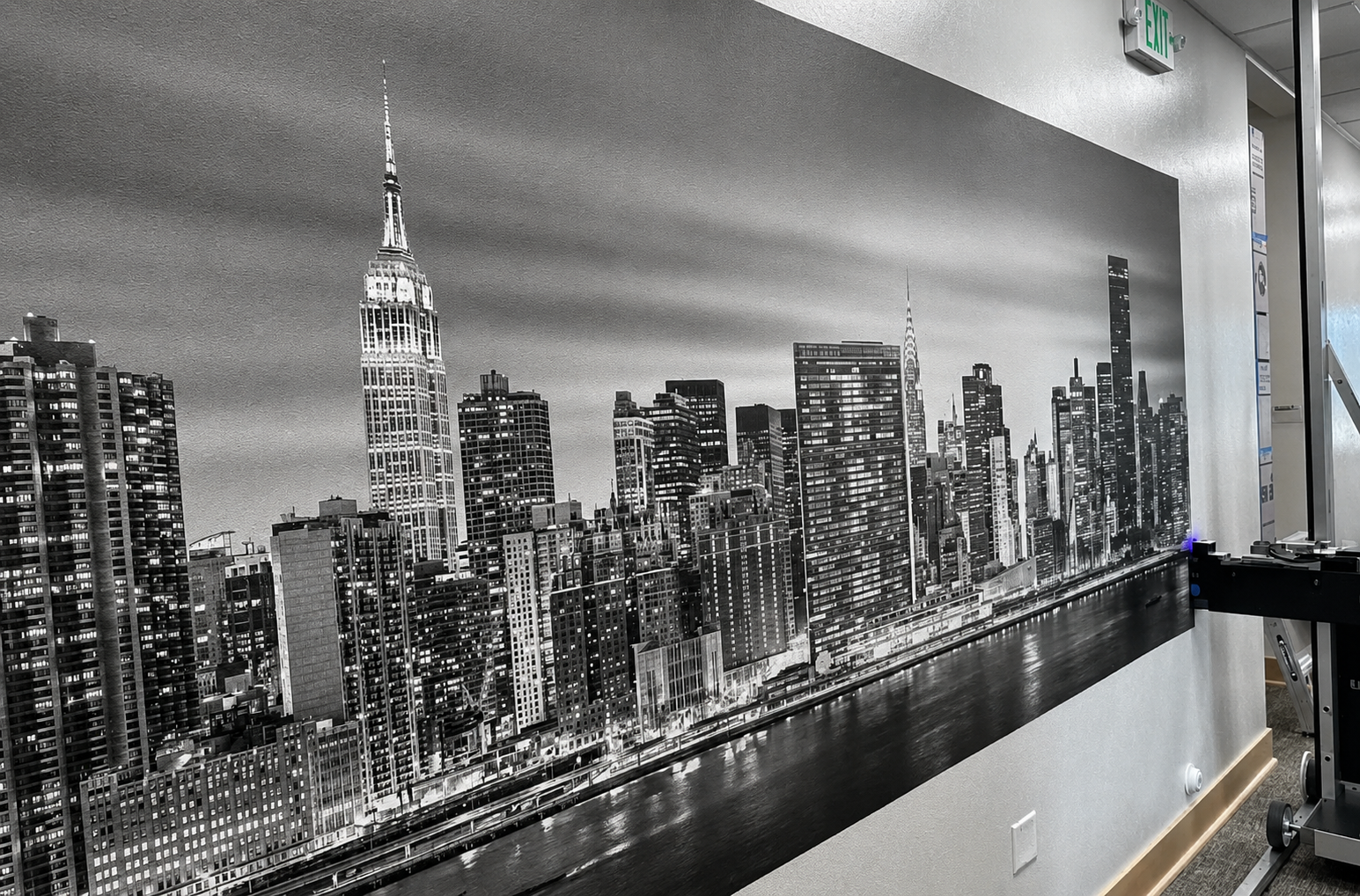
Wallpaper vs. Vinyl vs. Direct Wall Printing: Which Looks Best?
There is no universal winner because the desired finish is different.
Choose wallpaper when you want the texture and visual character of a wallcovering itself.
Choose vinyl when you want sharp commercial graphics that can later be removed or replaced.
Choose direct wall printing when you want the artwork to appear integrated into the wall with no wallpaper or vinyl panel seams.
For detailed custom murals covering large feature walls, direct printing has a clear aesthetic advantage because the image is not divided by wallcovering joints.
Which Is Easier to Install?
Wallpaper
Wallpaper installation can be relatively straightforward on smaller walls, but large photographic murals require careful panel alignment.
Installation becomes more difficult as the wall gets wider or the design becomes more detailed.
Vinyl
Vinyl eliminates wallpaper paste but still requires accurate positioning, smoothing, trimming, and seam alignment.
Large graphics usually benefit from professional installation.
Direct Wall Printing
Direct wall printing requires specialized equipment and an operator, so it is not a typical DIY solution.
However, once the wall and digital artwork are prepared, the printer produces the image directly on site without a separate wallcovering installation stage.
For commercial projects, this can simplify the workflow by eliminating the production and installation of large wallpaper or vinyl panels.
Which Option Is Most Durable?
Durability depends heavily on the exact material, ink, wall condition, environment, cleaning method, sunlight exposure, and protective finish.
As a general rule:
Wallpaper is suitable for normal indoor decorative environments but may be more vulnerable to moisture, scratches, or damaged edges.
Vinyl can offer very good commercial durability, especially when suitable media and protective lamination are used.
Direct wall printing can provide a durable indoor mural because the image is printed directly onto the prepared surface, but its actual performance depends on the ink technology, wall material, surface preparation, and environment.
For high-contact areas such as corridors where carts, furniture, or equipment repeatedly hit the wall, physical wall protection may still be necessary regardless of the printing method.
Which Is Easiest to Remove or Replace?
This is one category where direct wall printing is not automatically the best option.
If the mural is temporary, wallpaper or removable vinyl is usually more practical.
Best for Frequent Changes: Vinyl
Retail promotions, seasonal displays, trade shows, and temporary branding often change regularly.
Removable vinyl is designed around that workflow.
Best for Residential Redecoration: Wallpaper
Wallpaper can work well when homeowners want a decorative wall today but expect to redesign the room later.
Best for Long-Term Murals: Direct Wall Printing
Direct printing makes more sense when the mural is intended to remain part of the space.
When a new design is eventually required, the wall can typically be prepared or repainted before another mural is applied.
If you expect to replace the graphics every few months, direct wall printing usually offers less practical advantage than removable media.

Which Works on More Wall Types?
Surface condition matters for all three methods.
Wallpaper and vinyl generally perform best on smooth, clean, dry, properly prepared walls because the material must physically adhere to the surface.
Direct wall printing does not rely on a large adhesive film, which can expand the range of surfaces that can potentially be decorated.
Depending on the printer, ink, and surface preparation, direct wall printing may be used on materials such as:
Painted walls
Plaster
Concrete
Wood
Brick
Glass
Tile
Metal
However, this does not mean every wall can be printed immediately.
Extremely rough surfaces, deep gaps, strong wall irregularities, moisture, unstable paint, obstacles, or insufficient operating clearance can affect print quality.
A wall inspection should therefore happen before any direct printing project.
Which Is More Cost-Effective?
The cheapest quotation is not necessarily the cheapest solution.
With wallpaper, the total cost may include:
printing + wallpaper material + adhesive + installation + future removal
With vinyl:
printing + vinyl + optional laminate + installation + future removal
With direct printing:
wall preparation + on-site printing
Direct wall printing eliminates the printed wallcovering substrate and its installation, but it requires specialized equipment and professional service.
The most cost-effective choice therefore depends on the project.
For a small removable bedroom mural, wallpaper may make more financial sense.
For a short-term promotion, vinyl may be more practical.
For a large customized feature wall intended to remain for years, direct wall printing becomes much more competitive because there is no wallpaper or vinyl layer to manufacture and install.
Best Option for Different Wall Mural Projects
Homes and Bedrooms
Best choice: Wallpaper
Wallpaper offers strong decorative variety and is easier to replace when the room is redesigned.
Direct printing becomes more attractive for homeowners who want a truly customized, permanent feature wall.
Retail Promotions and Seasonal Graphics
Best choice: Vinyl
When campaigns change regularly, removability is more important than eliminating seams.
Trade Shows and Temporary Exhibitions
Best choice: Removable Vinyl
Temporary installations need graphics that can be installed quickly and removed after the event.
Direct printing makes little sense when the wall itself is temporary.
Offices and Corporate Branding
Best choice: Vinyl or Direct Wall Printing
Use vinyl when logos, campaigns, or corporate messaging will change.
Use direct printing for permanent reception murals, culture walls, branded feature walls, and decorative office environments.
Restaurants, Hotels, and Hospitality Spaces
Best choice: Direct Wall Printing
Hospitality spaces often value customized design and a seamless finish more than easy removal.
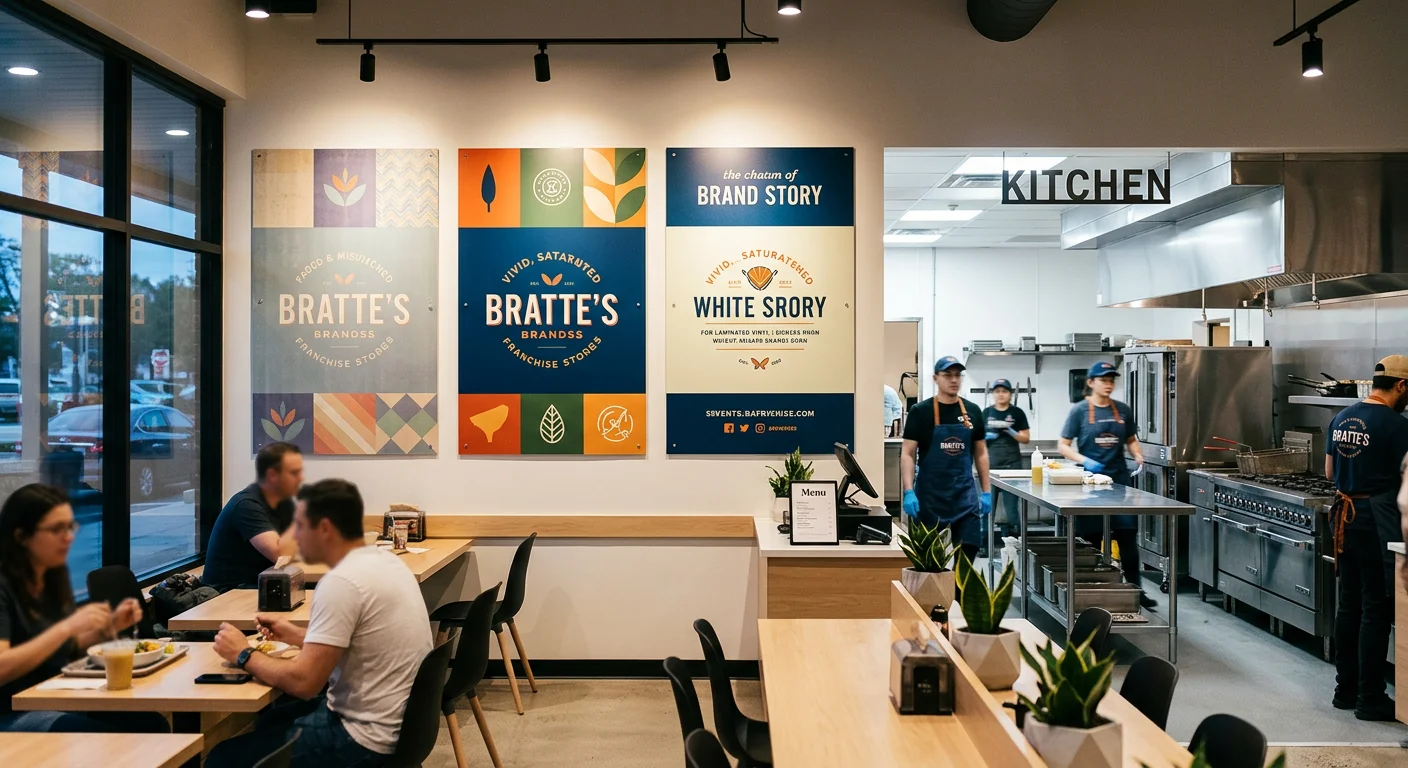
Restaurants can print location-specific artwork, hotels can create large lobby murals, and cafés can transform feature walls without covering them with conventional wallcoverings.
Schools, Museums, and Entertainment Spaces
Best choice: Direct Wall Printing for permanent graphics; vinyl for temporary exhibitions
The key question is how often the content will change.
Permanent educational illustrations, maps, artwork, and themed environments favor direct printing. Short-term exhibition graphics favor removable media.

Conclusion
There is no single best wall mural printing method for every project. The right choice depends on how long the mural needs to last, how often the design may change, and whether you want the image applied to the wall or printed directly onto it.
Wallpaper is a practical choice for residential interiors where texture, decorative variety, and future replacement matter. Vinyl works especially well for commercial graphics, promotions, exhibitions, and other applications where the design may need to be removed or updated.
Direct wall printing is the stronger option when the goal is a large, customized mural with a seamless appearance. Because the artwork is printed directly onto the wall, there are no wallpaper panels, vinyl seams, or adhesive layers. This makes it particularly attractive for branded interiors, feature walls, restaurants, hotels, offices, retail spaces, and customized residential projects where the mural is intended to feel like part of the architecture itself.
The decision can usually be reduced to three questions:
Is the mural temporary or long-term?
Will the design need to be replaced regularly?
Do you want a removable wallcovering or a seamless image printed directly onto the wall?
For temporary and frequently changing graphics, vinyl remains difficult to beat. For decorative walls that may be replaced later, wallpaper remains practical. But when customization, scale, and a seamless long-term finish are the priorities, direct wall printing offers a combination that traditional wallcoverings cannot fully reproduce.
Considering direct wall printing for your next project or business? Send WallPrintGear your wall material, mural size, application, and design requirements. The team can help evaluate whether direct wall printing is suitable and recommend the right printing approach for your project.