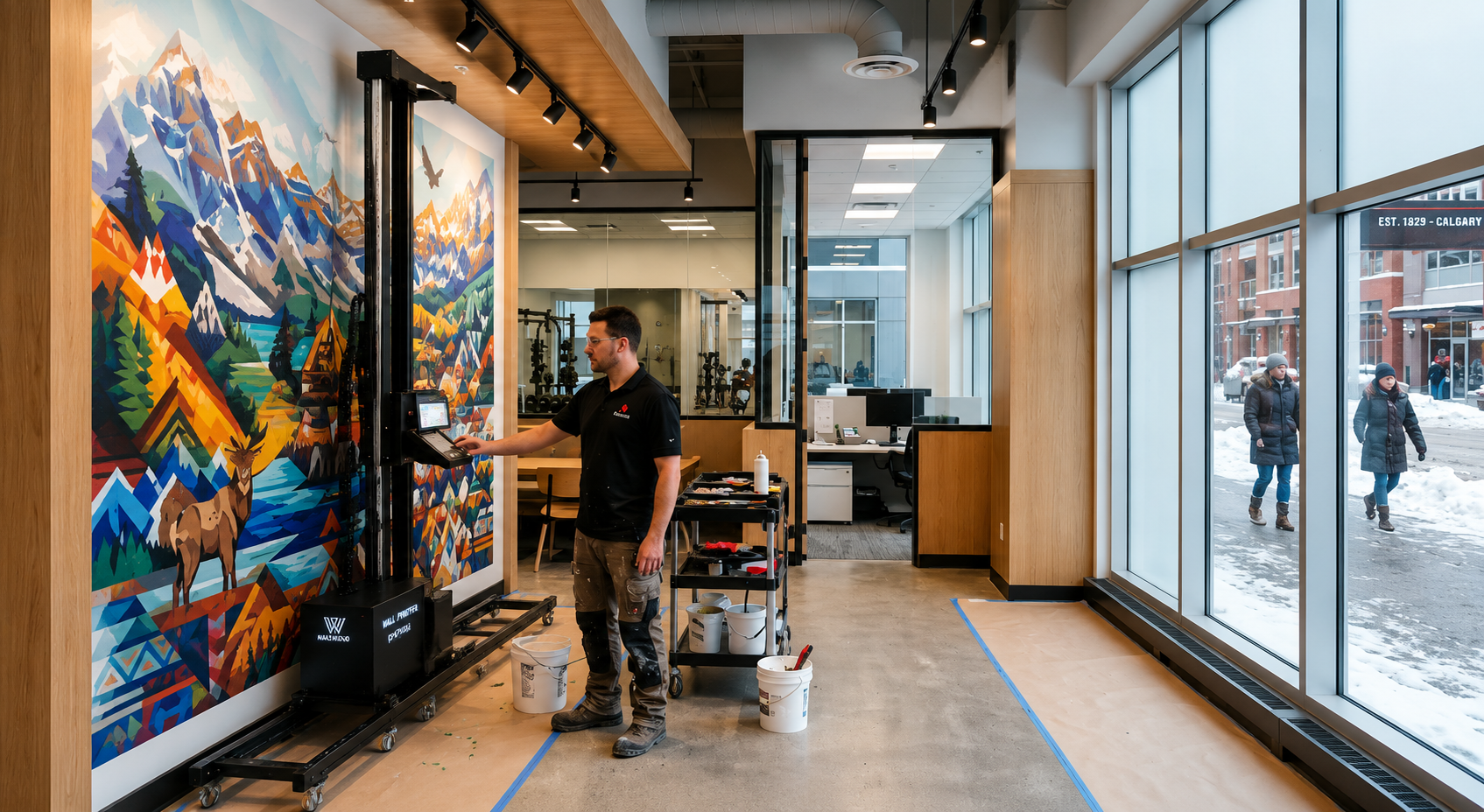
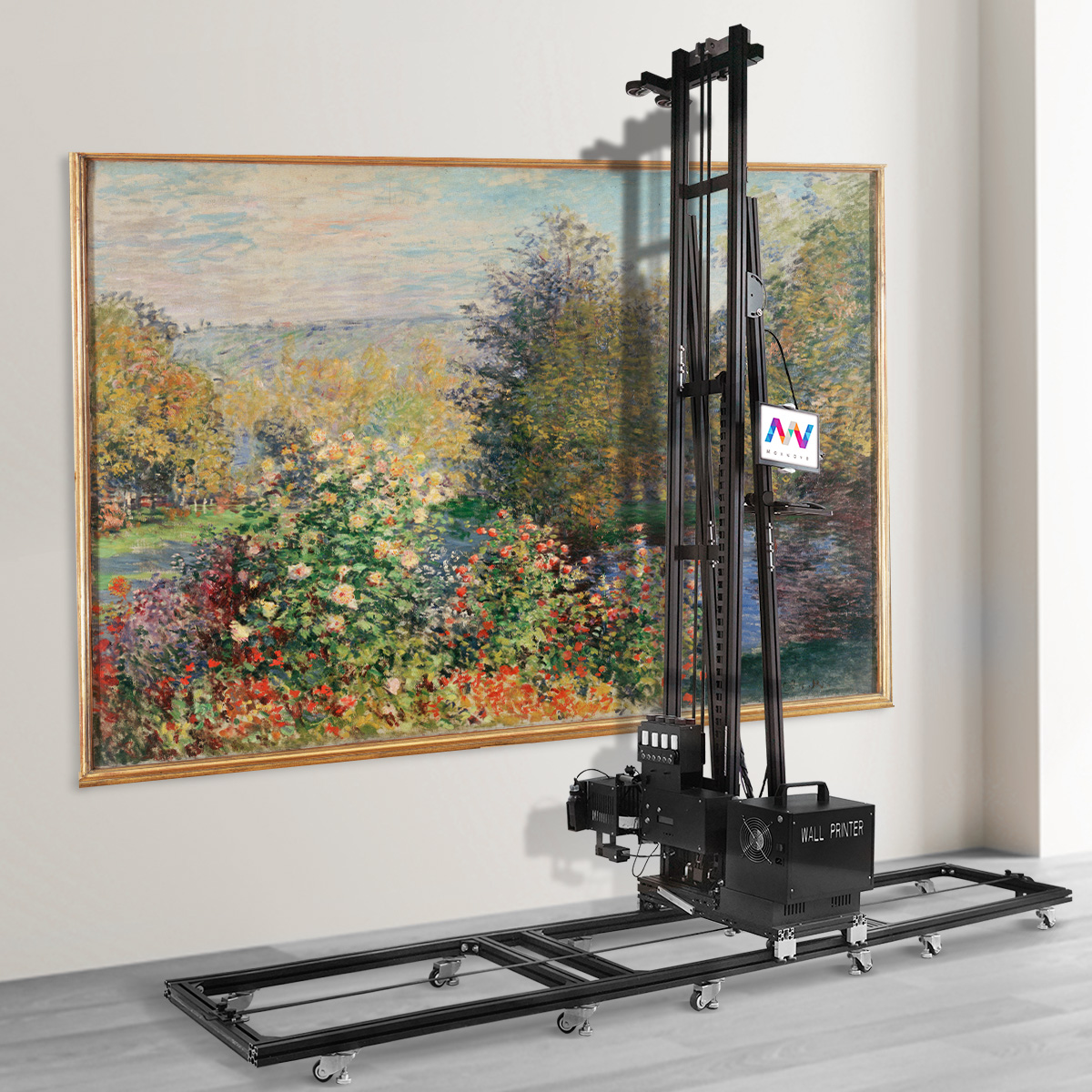
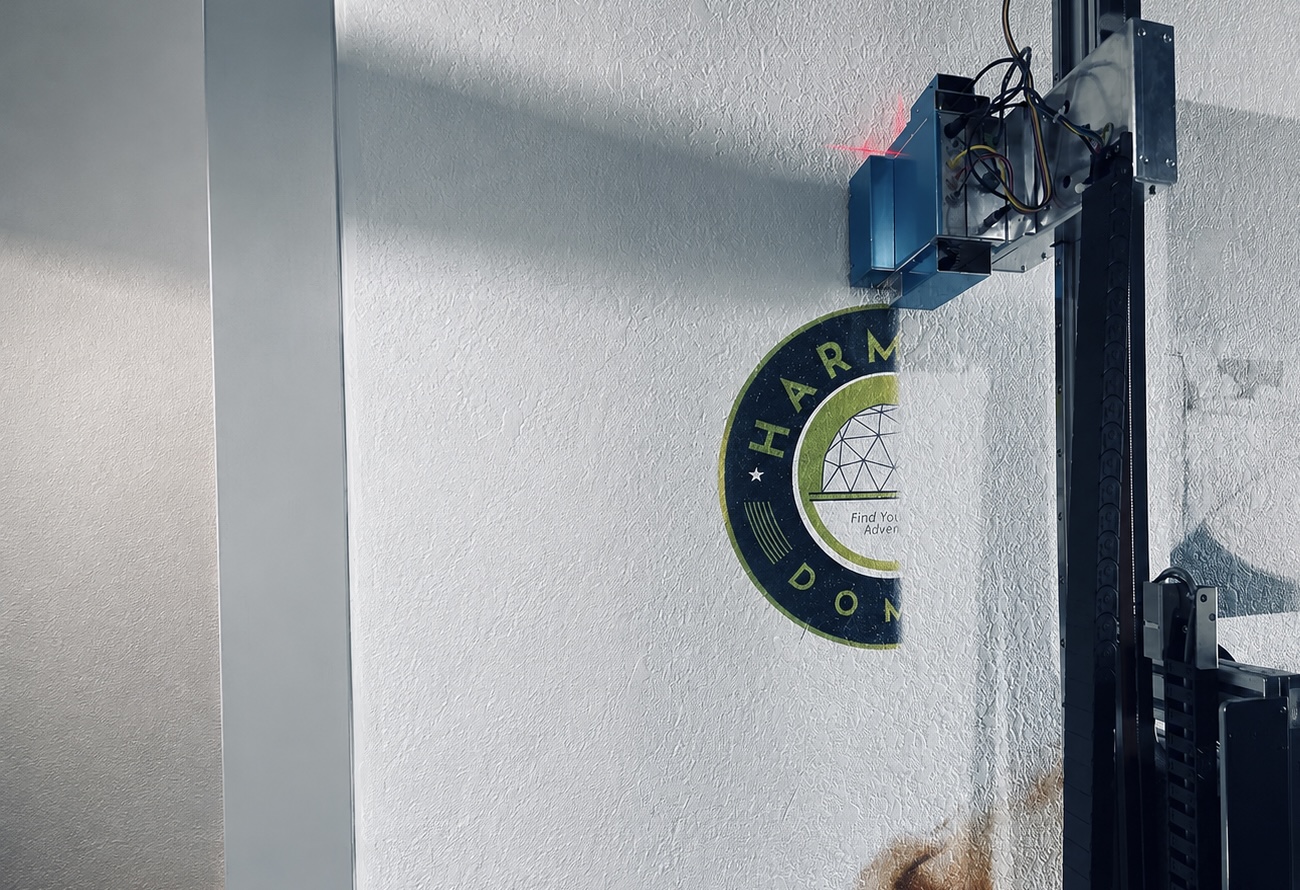
Starting a wall printing business looks simple from the outside: buy a wall printer, create a few murals, post the videos online, and start taking orders.
In reality, the printer is only one part of the business.
The companies that succeed usually answer three questions before buying equipment:
Who will buy the service?
How much will each project actually earn?
How will the first customers find you?
A better way to start is:
Validate demand → choose a target market → select the right printer → calculate startup costs → build a portfolio → get paying customers → standardize the workflow → scale when demand is proven.
This guide walks through that process.
Wall Printing Business Startup at a Glance
Step | What You Need to Decide |
|---|---|
1. Validate demand | Who in your local market would actually pay for wall printing? |
2. Choose customers | Residential, commercial, or both? |
3. Select equipment | What machine matches your first 6–12 months of work? |
4. Build a budget | Machine, shipping, ink, transport, marketing and reserve cash |
5. Set pricing | What does each job need to earn after all direct costs? |
6. Build a portfolio | Show finished walls and the printing process |
7. Get customers | Partnerships, local search and direct outreach |
8. Standardize delivery | Quote, inspect, prepare, print and document every project |
9. Scale carefully | Upgrade only when existing capacity becomes the bottleneck |
1. Validate Local Demand Before Buying the Printer
The first step is not comparing printheads.
It is finding out whether customers in your area will pay for the service.
Wall printing can appeal to several types of buyers:
Residential customers may want children's rooms, feature walls, landscapes, floral murals, family artwork or personalized interior decoration.
Commercial customers may need restaurant murals, branded office walls, hotel decoration, retail graphics, school artwork, gyms, entertainment spaces and reception areas.
For a new business, commercial customers can be especially valuable because one successful project may lead to repeat work across additional locations.
Start by contacting local interior designers, remodeling companies, restaurants, cafés, sign shops, property managers and hospitality businesses.
Show them examples of what direct wall printing can produce and ask whether they currently outsource murals, wall graphics or custom artwork.
The goal is not to prove that “wall printing is popular.”
The goal is to prove that people in your market are willing to request quotes or discuss real projects.
If you cannot generate serious interest before owning the machine, purchasing equipment alone is unlikely to fix the sales problem.
2. Choose a Clear Target Customer
Do not launch by saying:
“We print anything on any wall.”
That describes the technology but gives customers no reason to choose you.
A stronger business usually begins with one or two clear customer groups.
For example:
A residential-focused business might specialize in children's rooms, feature walls and personalized home murals.
A commercial-focused business might target restaurants, offices, retail stores and hotels.
A contractor-focused business might work with interior designers, remodelers and signage companies as a subcontractor.
Your target customer also affects the machine you should buy.
A solo operator visiting homes may value portability and fast setup.
A commercial contractor printing long walls may care more about speed, white ink, repeatability and technical support.
Choose the market first. Let that market determine the equipment—not the other way around.
3. Choose the Right Wall Printer
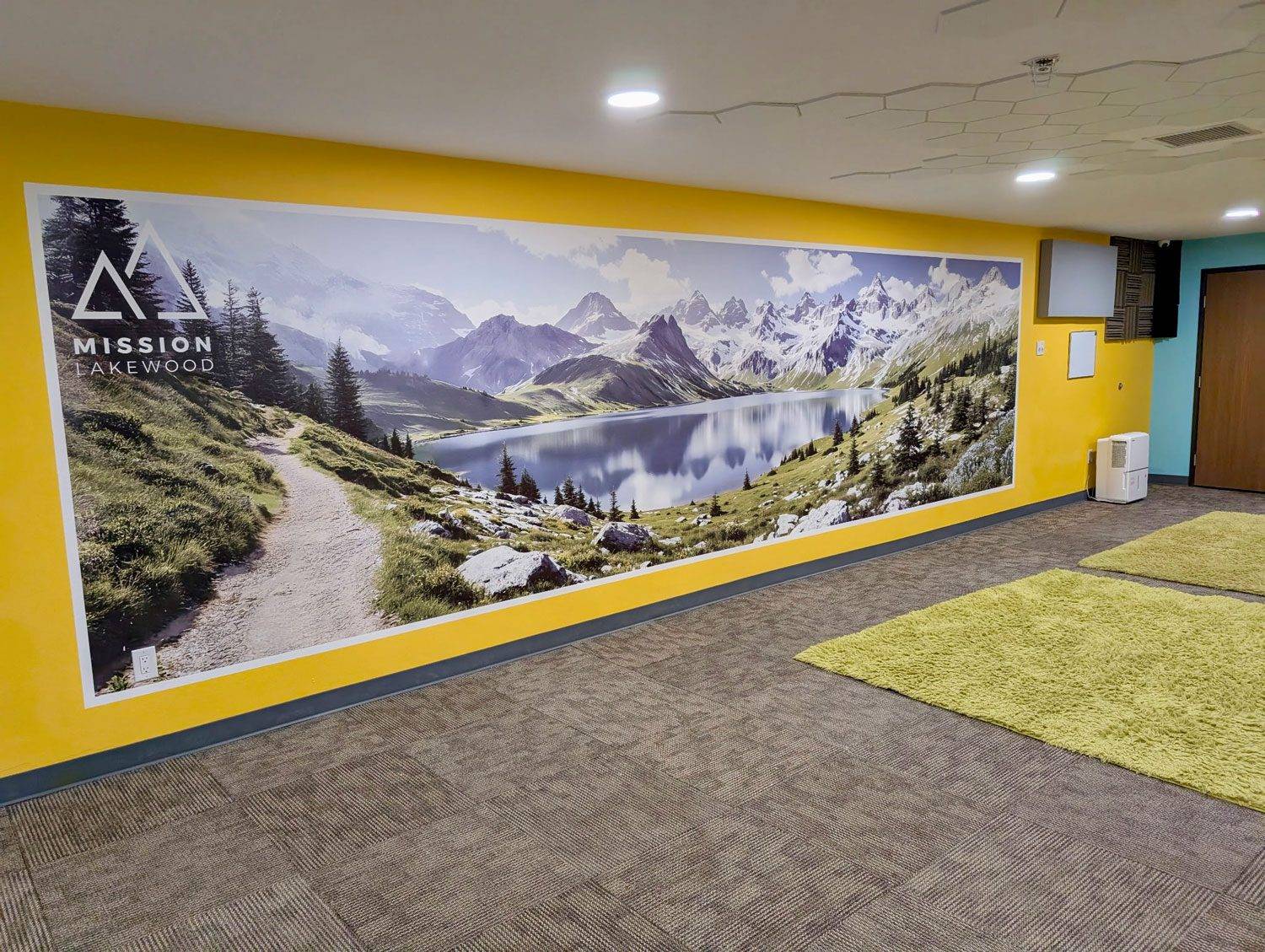
Once you understand the projects you want to sell, you can evaluate equipment more intelligently.
The original business plan distinguishes between portable entry systems and larger professional machines, but a new operator does not automatically need the more expensive category.
For most first-time businesses, the ideal machine should be capable enough to complete paid commercial work without using the entire startup budget.
Focus on practical features.
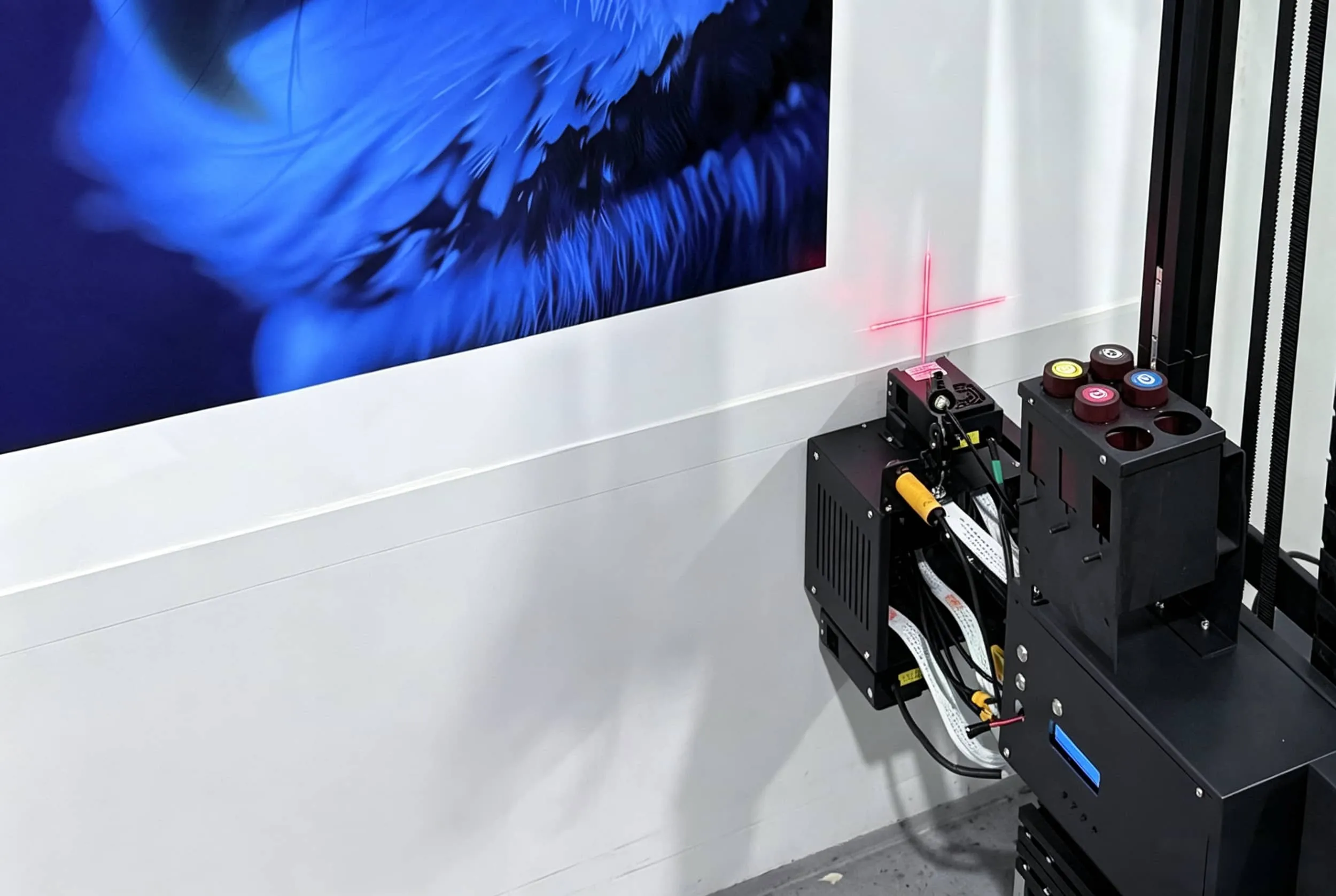
Printhead
Ask for the exact printhead model.
A recognized Epson printhead generally makes replacement, maintenance and troubleshooting easier than an unidentified printhead.
CMYK + White Ink
White ink is valuable when printing on dark or colored walls.
It also expands the machine's usefulness on wood, glass, tile, metal and other materials where a white underbase may improve color.
Wall-Distance Sensing
Real walls are not perfectly flat.
A reliable sensing system helps maintain a safe gap between the printhead and the wall as the machine moves.
Portability
If your business travels to customers, consider the packed dimensions, heaviest component, number of cases, assembly time and whether one person can operate the system.
Software and Support
Confirm that the RIP and control software are included and properly licensed.
Also ask how training works, what happens when the machine stops mid-job, and how quickly replacement parts can be shipped.
Do not choose a wall printer because it has the highest advertised DPI. Choose the machine that is easiest to keep working during paid projects.
4. Calculate the Real Startup Cost
The wall printer is usually the largest expense, but it should not consume your entire budget.
The original plan correctly separates startup costs from recurring costs. It includes equipment, transport, business registration, insurance, ink, marketing and operating expenses.
A practical startup budget should include:
Cost Category | Typical Items |
|---|---|
Equipment | Wall printer and accessories |
Delivery | Freight, customs, taxes and local transport |
Consumables | Ink, cleaning fluid and maintenance supplies |
Spare parts | Filters, dampers, wipers, pumps and other critical parts |
Transport | Cases, vehicle space and job-site protection |
Business setup | Registration, insurance and basic contracts |
Marketing | Website, samples, local promotion and sales outreach |
Cash reserve | Repairs, slow months and delayed customer payments |
The important principle is simple:
Do not spend all available cash on the machine.
You need money left to generate customers and complete the first projects.
A $6,000 printer with enough cash for marketing, ink and operating expenses may create a healthier business than a $10,000 printer that leaves you unable to promote the service.
5. Decide How You Will Price Jobs
A wall printing business should not rely only on a price-per-square-meter number.
Two walls of the same size may require very different amounts of work.
Your quote should consider the mural area, artwork preparation, wall condition, travel, setup time, white ink, printing time, surface preparation and cleanup.
A simple pricing structure is:
Project Price = Direct Job Cost + Business Overhead + Profit
For very small murals, consider a minimum project charge.
A small logo may use very little ink, but you still need to drive to the location, unload the machine, calibrate it, print, clean and pack everything again.
Without a minimum charge, small projects can look profitable on ink cost while losing money on labor and travel.
For larger commercial projects, you may quote by square meter while adding separate charges for design, preparation, travel or difficult working conditions.
6. Build a Portfolio Before Expecting Customers to Trust You
Wall printing is an unusually visual service.
Customers usually understand its value much faster from a 20-second video than from a page of technical specifications.
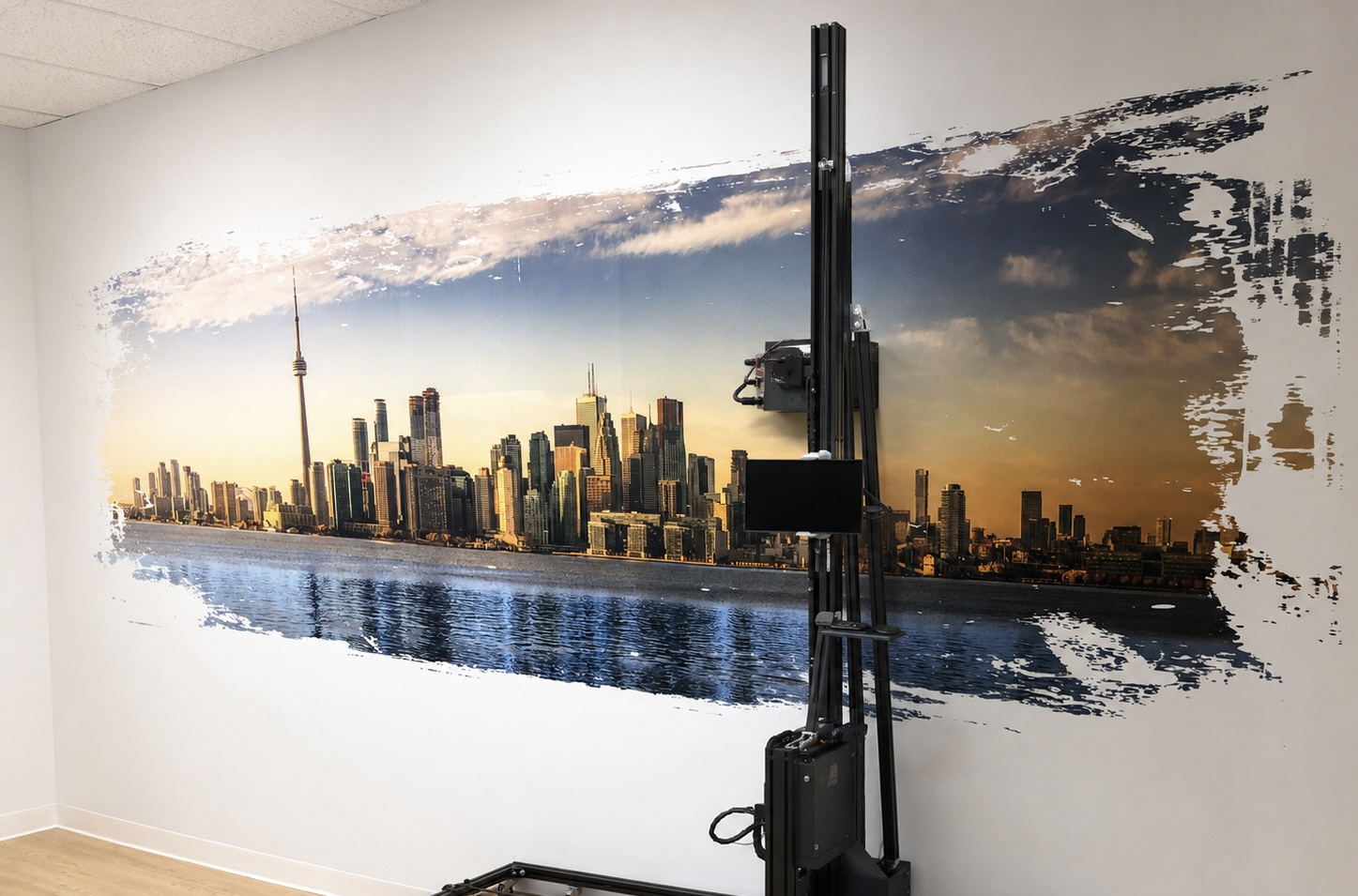
Before aggressive marketing, create several strong demonstration walls.
You do not need twenty examples.
A small portfolio could include:
A residential decorative mural.
A business logo or brand wall.
A photographic or highly detailed mural.
A commercial-style feature wall.
Most importantly, film the process.
Show:
Blank wall → machine setup → printing → finished mural.
These videos can later be reused on your website, social media, sales presentations and direct outreach.
Your portfolio should help customers imagine the service in their own space.

7. Get Your First Paying Customers
The original plan identifies three useful customer-acquisition channels: referral partners, local search and direct outreach. These are stronger starting points than simply relying on paid advertising.
Build Referral Partnerships
Interior designers, remodelers, sign companies, event planners and property managers already have access to potential customers.
A good partner does not need to buy a wall printer.
They simply need to recognize wall printing as another service they can offer.
Provide them with a short video, a small printed sample and several finished-project photos.
One design company that sends several projects per year can be more valuable than hundreds of random social-media followers.
Win Local Search Traffic
Wall printing is usually a local service.
Your website should clearly explain:
What you print.
Which locations you serve.
What types of walls you work on.
How customers can request a quote.
Pages such as “Wall Printing Service in [City]” or “Custom Wall Murals in [City]” can help attract customers already searching for a provider.
Project photos and customer reviews are especially important.
Use Direct Commercial Outreach
Look for businesses that have an obvious reason to improve their walls.
New restaurants.
Recently renovated hotels.
New offices.
Retail openings.
Schools redesigning interiors.
Instead of sending a generic sales message, show one relevant example and explain what could be created in their space.
Good outreach starts with the customer's wall—not your printer specifications.
8. Build a Professional Job Workflow
Once inquiries start arriving, you need a process that can be repeated.
A typical project should begin with the customer sending photos, wall dimensions and their design idea.
Before quoting, confirm the surface material, wall condition, printable area, access conditions and design requirements.
Before arriving on site, confirm that the wall is clean, dry and ready for printing.
At the project location:
Inspect the wall again.
Protect the working area.
Assemble and calibrate the printer.
Confirm image size and position.
Perform a test when required.
Print the mural.
Inspect the finished result.
Clean and maintain the machine before packing.
Afterward, save the project information.
Record the wall material, image size, ink settings, printing time and finished photographs.
That information makes future quoting easier and gradually builds your own operating database.
9. Learn Wall Preparation Before Taking Difficult Jobs
A wall printer machine cannot correct a bad wall.
Loose paint, dust, high moisture, unstable plaster, deep cracks and excessive texture can all affect printing.
Smooth painted drywall is usually easier for beginners.
Concrete, brick, glass, tile, wood and metal may require additional preparation, testing or primer.
During the first months of the business, it can be smarter to accept simpler walls and gradually expand into more difficult surfaces as you gain experience.
A profitable job is not the most technically impressive wall you can attempt.
It is the wall you can confidently finish at the agreed quality, time and price.
10. Learn Basic Maintenance Yourself
A wall printer is a commercial inkjet system.
It requires regular maintenance.
New operators should know how to perform nozzle checks, manage white ink, clean the printhead area, inspect filters and wipers, and shut down the machine correctly.
Also keep a small inventory of inexpensive parts that can stop production when they fail.
Before buying, ask the supplier:
What maintenance should I perform daily?
What maintenance should I perform weekly?
Which spare parts should arrive with the machine?
Which failures can I troubleshoot myself?
Technical support is important, but being completely dependent on the supplier for every small issue creates unnecessary downtime.

11. Track the Numbers That Actually Matter
You do not need a complicated business dashboard during the first few months.
Track:
Leads → Quotes → Paid Projects → Average Project Value → Direct Job Cost → Profit
Also record where each customer came from.
After several months, patterns will become obvious.
You may discover that interior designers generate better projects than residential ads.
Or restaurants may close faster than office clients.
Or small residential murals may generate more referrals than large one-off commercial projects.
Use real customer behavior to decide where to spend future marketing money.
12. Scale Only After Demand Becomes Predictable
Do not buy a second wall printer machine simply because the first machine is profitable.
Buy additional capacity when the existing machine becomes the bottleneck.
That might mean:
Jobs are being delayed because the printer is fully booked.
You regularly turn down projects because of insufficient capacity.
Commercial clients require faster completion.
Or you need different configurations for different applications.
At that point, upgrading to a faster printhead, adding another operator or purchasing a second system has a clear business reason.
Scale in response to demand—not in anticipation of demand.
How Much Money Do You Need to Start?
There is no universal startup number because equipment price, freight, marketing and local business costs vary significantly.
The original plan estimates that a lean mobile operation requires substantially less capital than a studio-based professional setup.
Instead of choosing one universal figure, divide your budget into three parts:
Equipment and delivery
First 3–6 months of operating expenses
Customer acquisition and cash reserve
The most dangerous startup budget is one where almost every dollar goes into equipment.
Can One Person Start a Wall Printing Business?
Yes.
A portable wall-printing setup can work well as a solo business, particularly when the owner handles sales, design, printing and customer communication.
However, one-person operation makes equipment portability more important.
Large commercial projects may eventually require another person for transport, setup, surface preparation or project management.
A solo founder should therefore optimize the first machine for simple transport, reliable setup and manageable maintenance, rather than maximum industrial capacity.
Conclusion
Starting a wall printing business successfully is less about buying the most advanced printer and more about building a reliable business around the machine.
The strongest order is:
Validate demand first.
Choose a clear customer group.
Buy a printer that matches realistic early-stage projects.
Keep enough cash for marketing and operations.
Build a visual portfolio.
Develop repeatable customer-acquisition and job-delivery systems.
Then expand when existing capacity can no longer handle the demand.
A wall printer can produce impressive murals within hours.
But the machine does not create the business.
Your customer pipeline, pricing, reliability and execution do.
Planning your first wall printing business?
Send WallPrintBox your target customers, typical mural sizes, expected applications, startup budget and delivery country. The team can recommend a suitable starter configuration, arrange sample printing and provide an itemized quotation so you can plan the equipment investment around a realistic business model.