Outdoor UV wall printing can last for years, but there is no honest universal answer such as “every mural lasts 10 years.”
A more realistic benchmark is:
Around 2 years outdoors without additional protection, and potentially more than 5 years when the print, wall surface and transparent UV-protective coating are properly matched.
For example, wallPen currently states that its UV wall-printing ink has outdoor UV resistance of around 2 years without protection, while a compatible transparent UV coating can extend that to more than 5 years. The company also makes clear that actual outdoor durability varies with the substrate and weather conditions.
That is a much more useful way to think about outdoor wall printing than promising every customer the same lifespan.
A mural on a sheltered exterior wall in a mild climate may remain attractive considerably longer than the same print exposed to intense afternoon sun, salt air, heavy rain and repeated freeze-thaw cycles.
So the real question is not simply:
“How many years does UV wall printing last?”
It is:
“How long will this specific print last on this specific wall in this specific environment?”
1. What Is a Realistic Outdoor Lifespan for UV Wall Printing?
For professional quoting, I would avoid using the original article's broad “2–10 years” range as though all of those outcomes were equally typical.
A better planning framework is:
Outdoor Situation | Practical Expectation |
|---|---|
Direct UV wall print with no additional protection | Around 2 years is a reasonable manufacturer benchmark |
UV print + compatible transparent protective coating | 5+ years can be achievable |
Sheltered façade / moderate exposure | Potentially longer, depending on wall and ink system |
Strong sun, rain, salt, pollution or severe temperature cycling | Expect faster fading or coating deterioration |
These are planning ranges rather than warranties.
Even wallPen's own technical manual warns that outdoor performance is much harder to predict than indoor performance because frost, heat, solar UV, wind, smog and weather affect both the substrate and the printed layer differently. For that reason, it does not provide a binding outdoor-life guarantee for every application.
That distinction is important for anyone operating a wall printer commercially.
If you tell every client that their outdoor mural will last 10 years, you are making a promise that the printing technology alone cannot support.
Instead, quote the expected life according to the actual environment.
Outdoor Lifespan Is Usually Limited by More Than the Ink
The ink is only one layer of the system.
A UV print can remain chemically stable while the paint underneath begins peeling.
Likewise, a perfectly prepared masonry wall can still experience visible fading if it receives intense direct sun every day.
For direct-to-wall printing, durability is a combination of:
Wall/substrate → existing paint or primer → UV ink → optional protective coating → outdoor environment
If one layer fails, the mural fails with it.
That is why the quality of a UV wall printer should not be judged only from resolution and printing speed.
For outdoor work, ink adhesion, curing, substrate compatibility and the recommended protection system matter just as much.
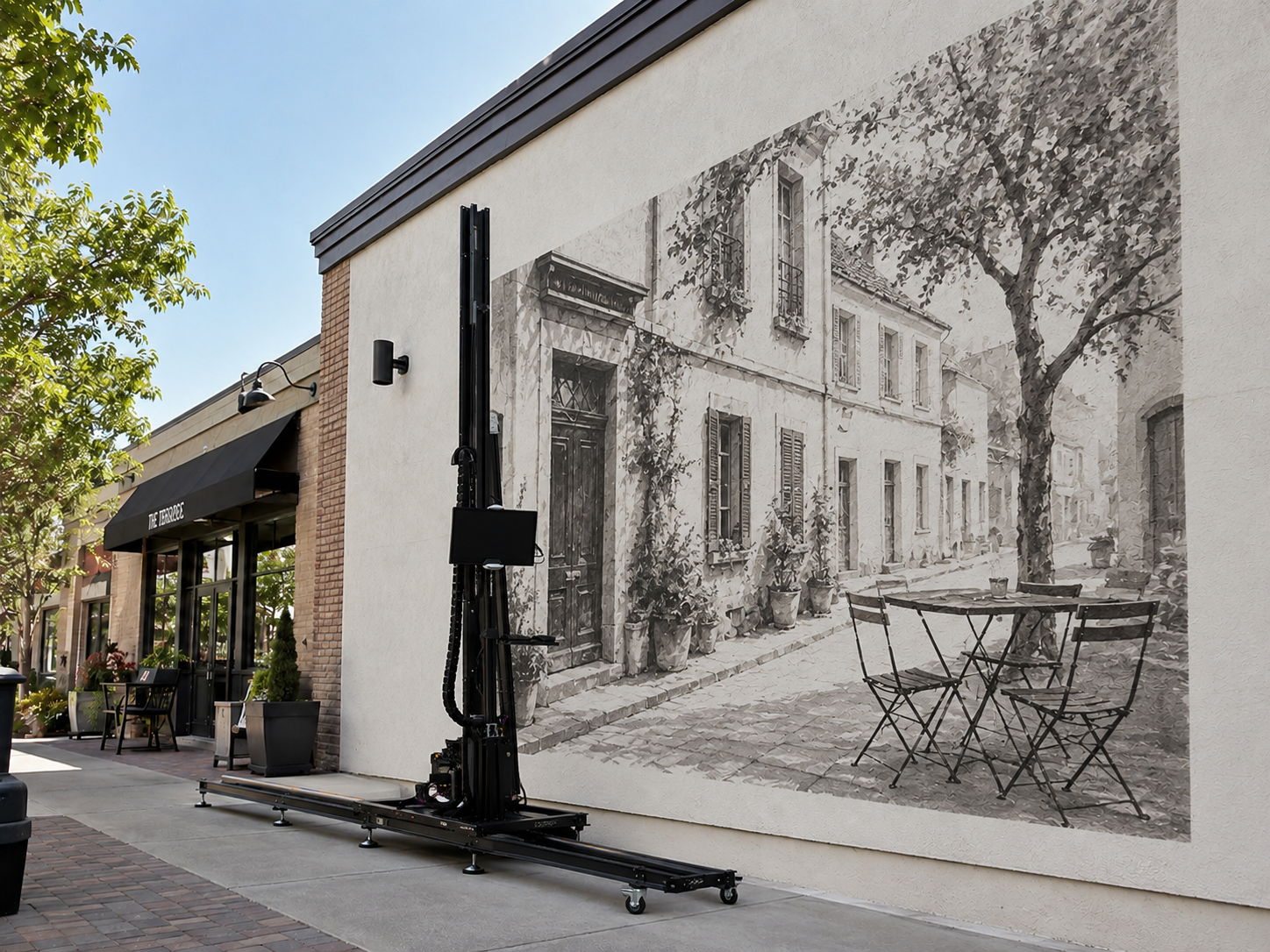
2. What Makes Outdoor UV Wall Prints Fade or Fail Faster?
The original article correctly identifies substrate, climate, UV exposure and protective coating as the major durability variables.
In practice, four factors matter most.
Direct sunlight is usually the biggest color-fading factor. A wall receiving many hours of intense direct sun—especially strong afternoon sun—will normally put more stress on pigments and coatings than a shaded or partially sheltered façade.
Do not rely too heavily on a universal “north-facing vs south-facing” rule because solar exposure changes with hemisphere, building geometry and surrounding structures. What matters is how many hours of strong direct sunlight actually reach the printed wall.
Moisture creates a different failure mode. Rain, condensation and persistent dampness can weaken the underlying wall coating or reduce adhesion. The printed UV layer may not be the first thing that fails; the paint or plaster underneath can become unstable.
This is especially important for masonry walls showing efflorescence, moisture penetration or old peeling paint.
A wall should therefore be stable before printing.
Temperature cycling stresses the complete wall system. Exterior surfaces expand and contract as they heat and cool. Different materials—paint, plaster, concrete, metal and the printed layer—do not always expand at exactly the same rate.
Repeated hot-cold cycles can therefore contribute to cracking or adhesion problems over time.
Salt, pollution and harsh cleaning accelerate wear. Coastal environments, industrial pollution and aggressive maintenance chemicals can all reduce the useful life of an outdoor mural.
For a wall printing machine business, this means two projects of exactly the same size may need different durability expectations.
A protected café façade beneath an awning and an exposed seafront exterior wall are not equivalent jobs.
The Existing Wall Condition Matters More Than Many Buyers Expect
Before printing outdoors, check whether the existing surface is:
Clean.
Dry.
Structurally stable.
Free of loose paint.
Free of chalking.
Free of significant grease or contamination.
Free of active moisture problems.
If existing wall paint comes away easily, putting a high-quality UV print on top will not make that paint stronger.
The mural will eventually come away with the coating underneath it.
For unfamiliar substrates such as metal, glass, tile, stone or certain paints, perform a test print and adhesion test first.
wallPen similarly recommends individual testing for materials such as metals and ceramic tiles rather than assuming universal adhesion.
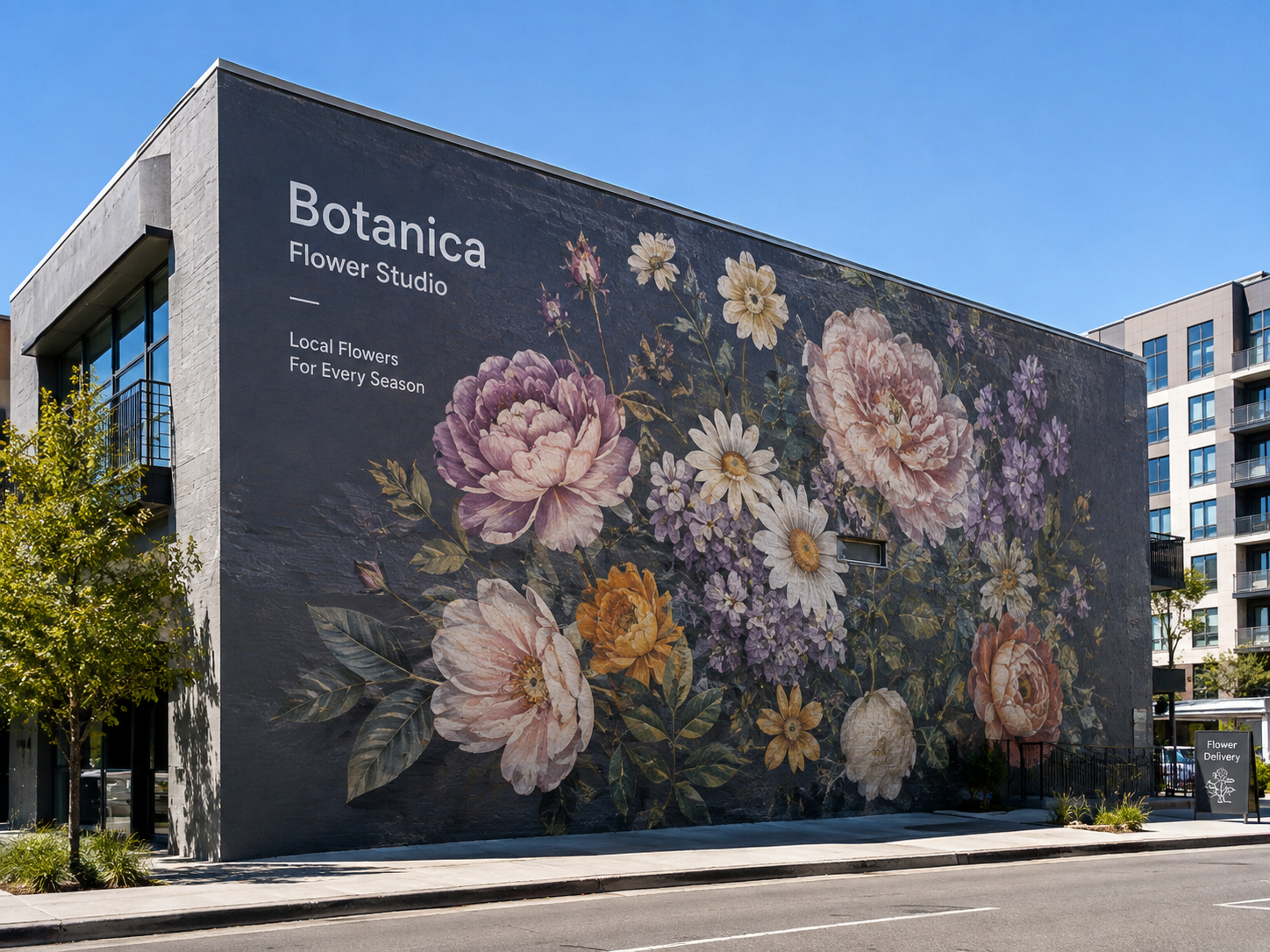
3. How Can You Make Outdoor UV Wall Printing Last Longer?
If outdoor durability matters, most of the improvement comes from correct preparation and protection rather than simply increasing print resolution.
Start with the wall. Repair loose paint, cracks, chalking and moisture issues before the printer arrives. Clean the surface and use the substrate preparation recommended for the ink system.
Use the correct UV ink. Do not assume every UV ink has the same outdoor stability. The printhead, ink formulation and curing system should be designed to work together.
Apply a compatible transparent UV-protective coating when long service life is required. This is one of the clearest ways to extend outdoor durability. wallPen specifically states that a transparent UV protective coating can extend its typical outdoor resistance from roughly two years to more than five.
Do not apply a random clear varnish.
The coating must be compatible with the UV ink and wall substrate. Test it first for adhesion, clarity, color change and cracking.
Protect the most exposed walls whenever possible. Architectural overhangs, awnings and partial shading can reduce direct sunlight and rain exposure significantly.
Clean the mural gently. Avoid abrasive pads, harsh solvents and aggressive pressure washing unless the ink/coating manufacturer specifically approves them.
For routine maintenance, remove dirt with a mild method that does not attack the protective coating.
The original article's maintenance section is useful in principle—gentle cleaning, protection and periodic inspection can extend service life—but the exact maintenance method should follow the specific ink and coating system rather than a universal recipe.
Inspect the Wall, Not Just the Printed Image
Outdoor maintenance should look for more than color fading.
Check for:
Peeling underlying paint.
Cracks.
Moisture stains.
Loss of adhesion.
Chalking.
Edge deterioration around repaired areas.
Physical abrasion.
Early detection matters because sometimes the problem can be repaired locally before it spreads across the mural.
For businesses using a vertical wall printer on exterior commercial projects, this can also become part of the service package: inspect, clean and refresh protective coating when required.
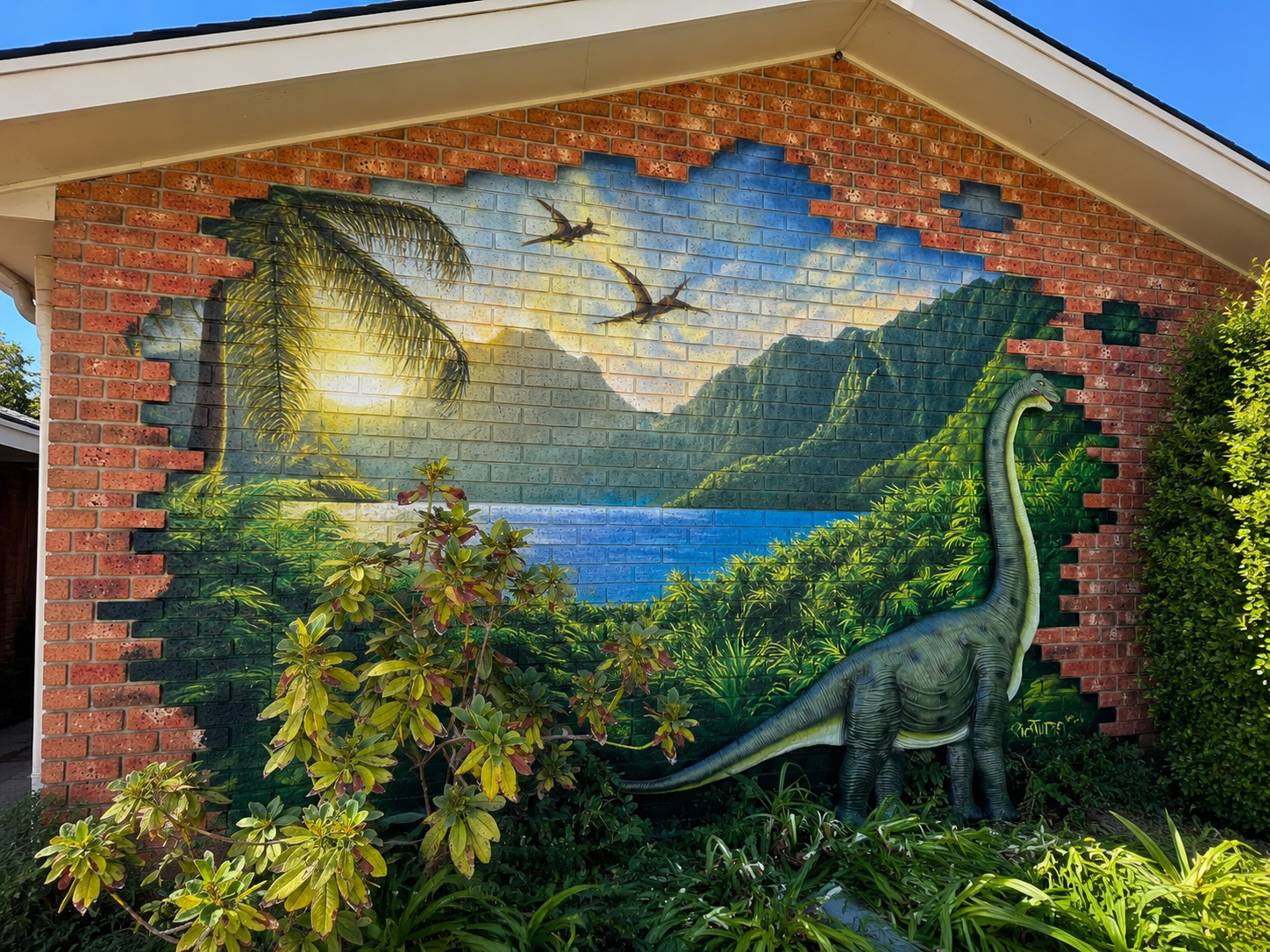
4. Is UV Wall Printing a Good Choice for Outdoor Murals?
Yes—when the project is specified correctly.
Direct UV wall printing is particularly attractive because the artwork is printed directly onto the architectural surface rather than producing vinyl panels that must later be installed.
That allows businesses to create large murals, branded façades, restaurant exteriors, retail graphics and decorative walls without visible panel seams.
A modern wall mural printer can also print across large surfaces while UV LEDs cure the ink immediately during production.
But outdoor work should be treated differently from indoor wall printing.
For an indoor hotel or office wall, durability may primarily depend on abrasion and cleaning.
For an exterior wall, you must consider sunlight, rain, moisture, pollution, freeze-thaw conditions and the condition of the building surface itself.
Outdoor direct wall printing makes the most sense when:
The wall is structurally sound.
The substrate and ink have been tested.
The expected service life is realistic.
The customer understands that outdoor exposure affects longevity.
A protective coating is applied when longer life is required.
The mural can be periodically inspected.
Do Not Use Accelerated Weathering Tests as a Direct “Years” Calculator
You may see suppliers refer to ASTM G154 or similar accelerated UV-weathering tests.
Those tests can be useful.
ASTM G154 provides a controlled method for exposing materials to fluorescent UV light and moisture so different formulations can be compared under the same conditions. But ASTM explicitly states that G154 on its own does not produce a specific service-life result.
ASTM's broader weathering guidance also cautions against converting a fixed number of laboratory exposure hours directly into a fixed number of outdoor years because climate and material formulation change the relationship.
So if a supplier says:
“2,000 test hours = 10 outdoor years”
ask for the correlation data supporting that conversion.
A test report is useful evidence of relative weather resistance.
It is not automatically a lifetime warranty.
Conclusion
For outdoor direct wall printing, around two years without additional protection is a realistic manufacturer benchmark, while a compatible transparent UV-protective coating can extend a quality print to five years or more under suitable conditions.
But outdoor lifespan is never determined by ink alone.
The wall surface, primer or existing paint, direct sunlight, rain, humidity, temperature cycling, pollution and maintenance all affect the final result.
That means a mural in a shaded restaurant courtyard may age very differently from the same artwork on a fully exposed coastal façade.
For a professional direct wall printing business, the safest approach is to avoid selling one fixed lifespan for every project.
Instead:
Inspect the wall → understand the climate and exposure → test the substrate → choose the correct UV ink → add a protective coating when required → set a realistic durability expectation with the customer.
That approach produces better outdoor results and reduces the risk of promising more than the wall, coating or environment can realistically deliver.
Considering outdoor wall-printing projects? Send WallPrintGear your wall material, location, outdoor exposure, mural size and expected service life. The team can help you evaluate a suitable wall-printer configuration and sample-print approach before you quote the project.